

by Mitsuru Shinadin
In a world where the veil between the ordinary and the extraordinary is a constant whisper, one might find themselves pondering a profound question: what if the fabric of our reality stretches far beyond the confines of our perception? This is not merely the genesis of a fantastical tale, but the very essence of a narrative that blossomed from a deep-seated fascination, nurtured by the vibrant worlds of Japanese manga, anime, and video games.
The allure of these mediums wasn’t solely in their pulse-pounding action or their imaginative landscapes. It was the tantalizing promise of a portal, a sudden opening into realms unseen. Characters would unearth latent abilities, traverse dimensions previously unimagined, encounter souls destined to reshape their very existence, or discover that their perceived reality was but a fragment of a grander, more expansive design. This profound sense of boundless possibility is the very wellspring from which the author draws inspiration, fueling the creation of English-language light novels in the Japanese style. For this storyteller, fantasy need not be burdened by exhaustive explanations; indeed, the most captivating aspect often lies in the exhilarating realization that mysteries endure, waiting to be unraveled.
When a Dream Becomes a Compass
This very concept served as the fertile ground for the narrative of The Dream Code. We are introduced to Mitsu, a fifteen-year-old adrift in the year 2047, inhabiting a sanctuary known as the City of the Good. Outside its sheltered walls, the world bears the scars of two devastating cataclysms, leaving behind a mere handful of survivors. Mitsu, too, feels the erosion of his past, a growing disconnect from his own history. Then, a recurring vision begins to haunt his sleep – a vivid, insistent dream.
The ethereal voices of people call to him, a desperate plea: “Mitsu, save us.” Among them, several young women appear. One clutches a faded piece of paper, bearing the year 2025. In the hazy distance, a humble village gazes towards him with an ember of hope. The meaning of this dream eludes Mitsu, yet an undeniable truth resonates within him: it cannot be ignored. In a world teetering on the brink of oblivion, where much has been lost, this dream bestows upon him something he craves above all else: a purpose.
The narrative unfolds as the Grandmaster of the City of the Good divulges that Mitsu’s dream is intrinsically linked to his destiny. He is tasked with a journey that transcends time itself, a voyage twenty-two years into the past to locate the souls he has witnessed in his visions. However, this odyssey is destined to unfold in ways far beyond his initial comprehension.
When Reality Reshapes Itself
With the aid of Master Genryu, the Grandmaster’s enigmatic ring, and a surge of otherworldly energy, Mitsu makes his temporal leap to 2025. But his arrival is not merely a physical translocation through years. He finds himself inhabiting the form of Kanzaki, a thirty-seven-year-old man residing in Tokyo, and, in essence, stepping into another life entirely. Kanzaki’s ingrained memories and ingrained habits begin to intermingle with Mitsu’s consciousness, birthing a profound internal conflict between two distinct identities. Mitsu must now navigate the complexities of an unfamiliar city, a transformed reality, and a life that was never meant to be his.
This, for the author, is where the true magic of fantasy lies. It allows for the exploration of an impossible premise to probe deeply human questions: Who are we, at our core? Are our identities forged by our recollections, our lived experiences, our choices? Or does something more profound define us? The author posits that destiny does not negate free will. Rather, we are tethered to certain aspects of existence, but within these parameters, our actions retain immense significance. Mitsu cannot unilaterally undo the devastation that befell his world. Yet, he possesses the agency to choose to safeguard lives, to heed the mystical summons that has brought him to this juncture, and to encounter individuals and experiences that will irrevocably alter his self-perception.
The Realm Beyond the Familiar
Adding another layer of intrigue to The Dream Code is the introduction of the Dream Realm. This is no mere space of slumber; it is a mystical domain where visions manifest, secrets lie hidden, and dimensions converge, revealing abilities and possibilities that lie dormant in ordinary existence. It is here that the narrative seeks to deepen its enigma. What if a dream is not confined to the landscape of the mind? What if it serves as a conduit, a window into something more? Could the individuals encountered within this ethereal space be inextricably linked to our waking lives? Might a chance encounter in a dream eventually blossom into a real-world connection?
For Mitsu, these questions grow in intensity as the figures from his dreams begin to materialize in his waking life. The mysteries surrounding them gradually weave themselves into something far more potent: love. Ultimately, this is the heart of The Dream Code. It is a profound exploration of genuine love and the imperative of recognizing reality – not merely the tangible world, but the relationships, the purposes, and the connections that imbue our lives with meaning.
The Joy of World-Building
The author champions the notion that a story need not be confined by rigid genre boundaries. It can beautifully encompass romance and supernatural mystery, fantasy and temporal displacement. A narrative can commence in a desolate, post-apocalyptic future and unfurl into an entirely unexpected destination. This fluidity is a hallmark of Japanese-style storytelling, capable of embracing monumental concepts while grounding the journey in personal experience. The fate of an entire world can coexist with the intimate tapestry of a character’s friendships, aspirations, dreams, and affections.
This is the essence of the storytelling the author endeavors to cultivate within The Dream Code. Though the narrative is penned in English, the author’s creative bedrock is firmly rooted in the manga, anime, games, and Japanese fiction that sculpted their imaginative faculties. The ambition is to channel this spirit – not to replicate existing narratives, but to infuse it with original characters, bespoke worlds, intricate mysteries, and unique ideas.
For this writer, the act of creation is an avenue to pose questions that reality often keeps from our grasp. What if destiny is an undeniable force? What if dreams hold a significance far beyond our current understanding? What if the very person you are seeking is already woven into the threads of your story? What if the world is infinitely more peculiar than you ever dared to imagine? Rather than providing definitive answers, the author aims to invite the reader to step through the threshold, to embark on a shared discovery. For, perhaps, the most profound gift of fantasy is not the presentation of an alternate reality, but the awakening of a fundamental wonder: could our own perceived reality hold more than we have yet learned to perceive?
About the Author
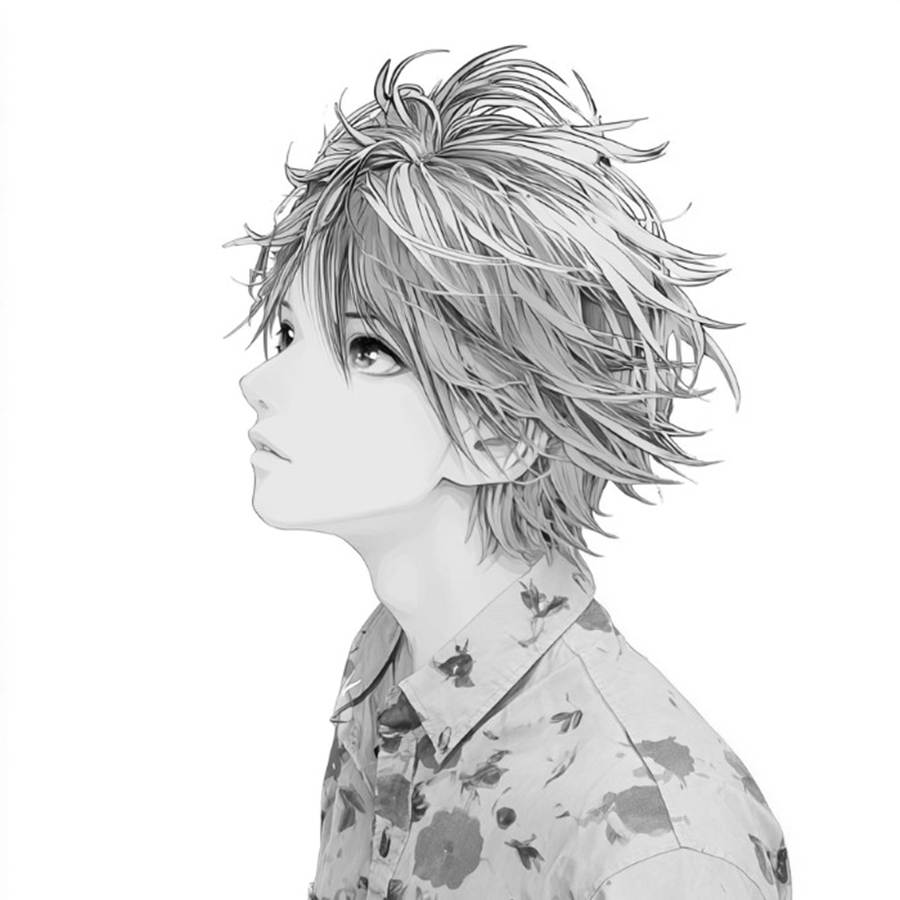
Mitsuru Shinadin, a pseudonym that echoes the author’s deep appreciation for Japanese storytelling, is the visionary behind The Dream Code: Yume no Kōdo (夢のコード). This English-language light novel, crafted in the Japanese style, masterfully intertwines elements of post-apocalyptic fiction, time travel, romance, fantasy, and the supernatural.
The author’s formative years were immersed in the captivating narratives of Japanese manga, anime, and video games, fostering a profound admiration for their distinctive storytelling, unforgettable characters, and imaginative universes. These influences coalesced to shape a creative style that harmonizes the evocative spirit and deliberate pacing of Japanese fiction with the author’s own original concepts, fantastical elements, and intricate world-building.
The Dream Code marks Mitsuru Shinadin’s debut in the literary world. Prior to this, the author honed their skills as an editor and digital artist at Weebz Club Studio, contributing to a variety of Japanese-inspired creative projects and cultivating a rich experience in storytelling, visual design, and the art of world-building.
The adoption of a Japanese pen name is a deliberate tribute to the author’s reverence for Japanese narrative traditions and a steadfast commitment to forging original fiction for a readership that cherishes light novels, manga, anime, and the boundless possibilities of fantasy.
About The Dream Code
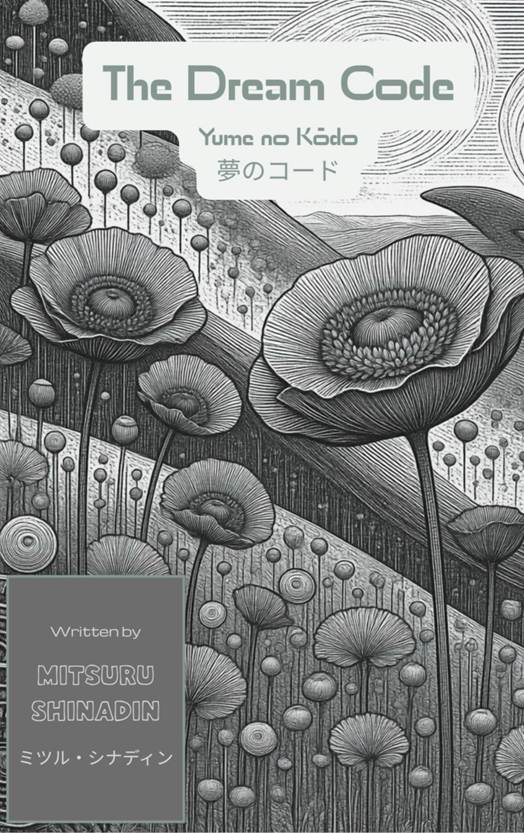
The Dream Code: Yume no Kōdo (夢のコード) is an English-language light novel, meticulously crafted in the Japanese style, that seamlessly blends post-apocalyptic fiction, time travel, romance, fantasy, and elements of supernatural mystery.
The narrative is set in 2047, a world ravaged by two catastrophic events that transpired between 2044 and 2045, leaving behind a desolate landscape. Amidst the scattered remnants of civilization, one of the few surviving enclaves is the sanctuary known as the City of the Good, where Mitsu, a fifteen-year-old boy, resides.
Mitsu is haunted by vivid, recurring dreams. In these visions, he hears the desperate pleas of young women calling out to him from a shadowed forest: “Mitsu, save us.” One of these spectral figures clutches a fragment of paper, marked with the year 2025. In the dim periphery, a humble village gazes towards him, its inhabitants holding onto a fragile thread of hope.
When the city’s enigmatic Grandmaster finally unveils the truth behind Mitsu’s visions, he learns of a critical mission. He must embark on a journey twenty-two years into the past, locate the individuals from his dreams, rescue them from the looming disasters, and guide them safely to the sanctuary of the City of the Good.
Read The Dream Code on Amazon.