


by Lee Upton
Sometimes I feel dread before opening my laptop and diving into an early draft. I dread how my own mind may want to boil itself alive for my failures on the page. I dread seeing how mistakes flare, how my hoped-for excitement from the day before may dissipate. There’s not much of a remedy, I find, except to face down dread and re-enter the work, acknowledging what’s wrong but moving ahead with the belief that there’s a better way forward. And maybe I’ll even discover that what seemed wrong could be almost right. Or that being wrong leads to something better than simple rightness.
Being a writer, for some of us, may mean knowing a good deal about making mistakes, given how often we need to revise. Which may be why writing literary fiction that uses mystery tropes can be especially appealing. Getting things wrong is part of the fabric of the mystery novel. If the mystery has done its job right, readers’ guesses fall short and readers accept being wrong, even luxuriate in it. Particularly as readers, we may want to be misled. Otherwise, we’re disappointed and the thrill ride of the novel ends anti-climactically. In somewhat similar ways, I write literary fiction that revolves around mysteries for the same reasons I read mysteries: to lead myself into a puzzle, get stuck, and struggle to release myself, retracing my steps, re-reading clues, seeing what even my own writing is hiding from me. Writing a mystery, for me, means being like the reader of a mystery: reassessing characters’ motivations, readjusting expectations, trying to animate the plot with my imagination.
When the novelist Kate Racculia visited classes where I taught at Lafayette College she pointed out that novels by nature are mysteries. Novels, in whatever subgenre, are often built like mysteries: on the framework of tension, suspense, and revelation. And clues. When we study our drafts we may discover that we inadvertently planted early hints about the direction our work should take. As writers of mysteries, to get the tricky logic of our novels right, we might find it illuminating to treat our writing the way, as readers, we treat mysteries: by assuming that some clues may have escaped our attention. Fostering a patient, questioning attitude toward what earlier looked unsound or misplaced in our drafts may help us discover new, unexpected routes that deepen our work. It’s not a bad idea to remind ourselves regularly that it’s possible to be too hasty and dismiss portions of our writing—which is why I keep and date all versions of my fiction.
As writers who experiment with tropes drawn from mysteries, we’re developing sequences that encourage readers, at least initially, to get things wrong time and again. In turn, while writing, like our readers we too have to develop an advanced tolerance for getting things wrong. Our experiments on the page can double-back and become errors, but by patiently following our tracks we may find the new, unexpected routes that allow our work to deepen. To get the tricky logic of a mystery novel right, in drafts the author may be the reader who most needs to be misled.
During a difficult time in my life I turned to mystery novels to block out my worst thoughts. Night after night, I pulled an Agatha Christie paperback close and let my mind move away from my fears and regrets. Mysteries divert us because of the concentration the genre demands. We focus on details, ferreting out characters’ motivations, tracking the sneaky logic that makes the novel’s engine run. And then, finally, we come to the last pages of a mystery and much is revealed, a form of closure that usually isn’t available to us otherwise in our lives. But even in tightly constructed, comforting mysteries, such as those Christie wrote, there’s always some human quirk that can’t be fathomed.
My new novel is called Wrongful. It’s a homage to mystery writers and the readers who enjoy and need them, and it’s about writers behaving wickedly and the mystery of what we call evil, and the vitality of evil.
A failed 27-page unpublished short story I wrote several years ago provided the basis for both my new novel Wrongful (2025) and my previous novel Tabitha, Get Up (2024). My comic novel Tabitha, Get Up originated from a character’s voice in an email at the end of that short story. I changed the character considerably while maintaining the generative energy of her voice. Wrongful, on the other hand, didn’t emerge from a specific voice but from a cluster of plot elements. In the original story I had fallen victim to premature closure. More needed to happen in the plot, and I needed time and space—not only in my own life—but on the page. To fulfill itself, the plot, set at two literary festivals ten years apart, had to be extended over 60,000 words. For Wrongful, I retained a catalyzing event and lengthened the original chain of actions, deepening characterization to contemplate how evil justifies itself.
It felt satisfying to rescue elements from my failed short story and to give those characters longer lives in a novel. I kept a friendly though investigative attitude toward characters, working to figure out their interior lives. (Sometimes I think writing is a bid for companionship. Fictional friends can’t take the place of actual friends, but maybe writing about characters helps us understand our actual friends a bit better.) The thing is, fictional characters usually can’t all be good people. In mystery novels, in particular, someone has most likely done something absolutely awful. Writing a novel that features a mystery doesn’t mean action has to happen in a locked room, but it is helpful to think of locked perspectives. What static view could fester into violence? Who harbors resentment that can’t be defused? Culprits have their reasons—and figuring those out can feel like pinning a moving shadow to a wall.
Several characters in Wrongful are thin-skinned, petty, gossipy, and corrupted by misplaced ambition. Some swing between grandiosity and self-flagellation, and I care about them, even the worst of them. I could listen to them for a long time, including those who have a curdled view of themselves. At different points while I wrote Wrongful I found it useful to suspect all of them.
The word “wrong” appears thirty-nine times in Wrongful. Characters get things wrong by doubting their instincts or relying only on instincts, overlooking facts, underestimating the self-interest of others. and stubbornly insisting on their own limited point of view. As a biographer tells my idealistic character Geneva Finch, a voracious reader, “You might as well admit you’re wrong. You’ve been wrong enough, I guess you might as well enjoy it when you find out you were right earlier…. You weren’t wrong then. You’re wrong now.”
Characters project their fears and desires and even their imaginative capacities onto the innocent. Multiple characters claim that the popular author Mira Wallacz uses them for inspiration. A childhood friend believes that her own mystical turn of mind is reflected in Wallacz’s work: “It’s in the novels, all those subtle supernatural grace notes. Those are from me.” The friend also claims: “I suspect Mira Wallacz is trying to seduce me…—all those blasted sex scenes. She leaves much to the imagination—that’s what about five hundred lunatics said on Goodreads.”
A biographer recalls threatening to sue Wallacz, claiming one of the novelist’s characters was based on her own life, and demands a percentage of the novel’s profits. Another character believes her suggestions were essential for the author: “The truth is, Mira made what happened to her inevitable when she stopped taking advice from me. That’s not a crime if the advice is bad. But if the advice is excellent—then it’s a crime against nature.”
The novel is partly inspired by what I observed when attending my first writing festival. I was in my early twenties, about the same age as the primary character Geneva Finch at the start of Wrongful. While attending that festival, I witnessed inspiring acts of generosity, undeniable kindness, and imaginative boldness. I also witnessed attempts to belittle an older poet, acts of condescension that made me shiver, and obvious hostility between a few writers. I remember the shock of discovering my idealistic notions about exalted behavior among writers were naïve. Writers were human, prey to vices like any other people, and maybe prey to a wide range of vices, especially given the nature of writing aimed toward publication. The reasons why are many: external rewards are so uncertain, rejection so common, self-belief so threatened, standards of judgment so subjective, reputations so erratic, energy so exhaustible, envy so eruptible.
The process of writing a novel with a mystery at its heart may lead us to questions about our own investment in the endeavor. Why has writing a mystery magnetized our energy? What secret is the manuscript trying to reveal? What have we been hiding? And we might consider, too, how it is that a genre built on initially leading us to wrong conclusions may generate our self-forgiveness and renewed tolerance for the inevitability of human error—and a little more familiarity with the strange workings of our own minds.
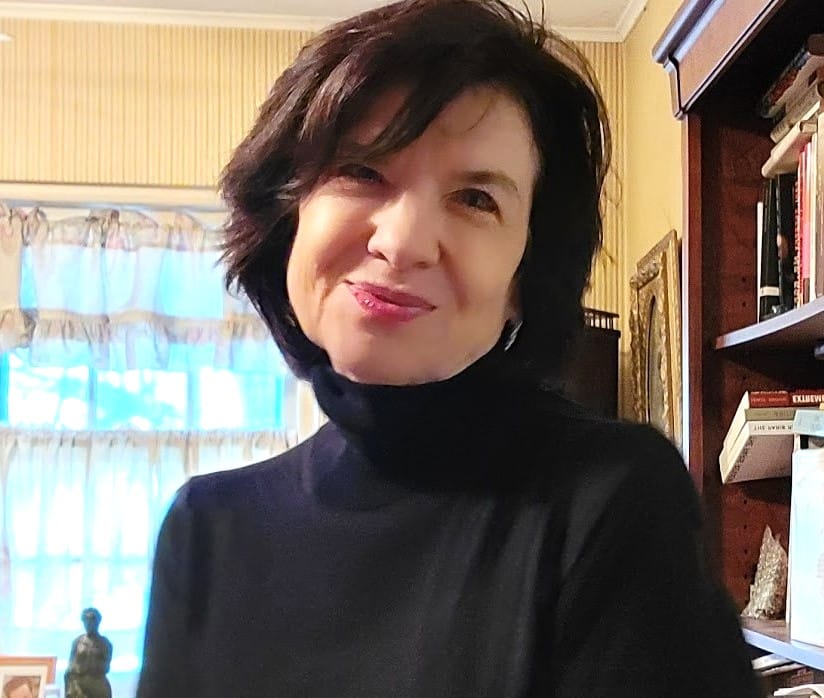
Lee Upton is the author of the comic novel Tabitha, Get Up and the literary mystery Wrongful, both from Sagging Meniscus Press. Her forthcoming novel, The Withers, will appear in June 2026 from Regal House Publishing. Tabitha, Stay Up, a sequel to Tabitha, Get Up, is forthcoming in September 2026. Her collection of new and selected poems is due out in 2027 from Saturnalia Books. www.leeupton.com
WRONGFUL at Sagging Meniscus Press: https://www.saggingmeniscus.com/catalog/wrongful/